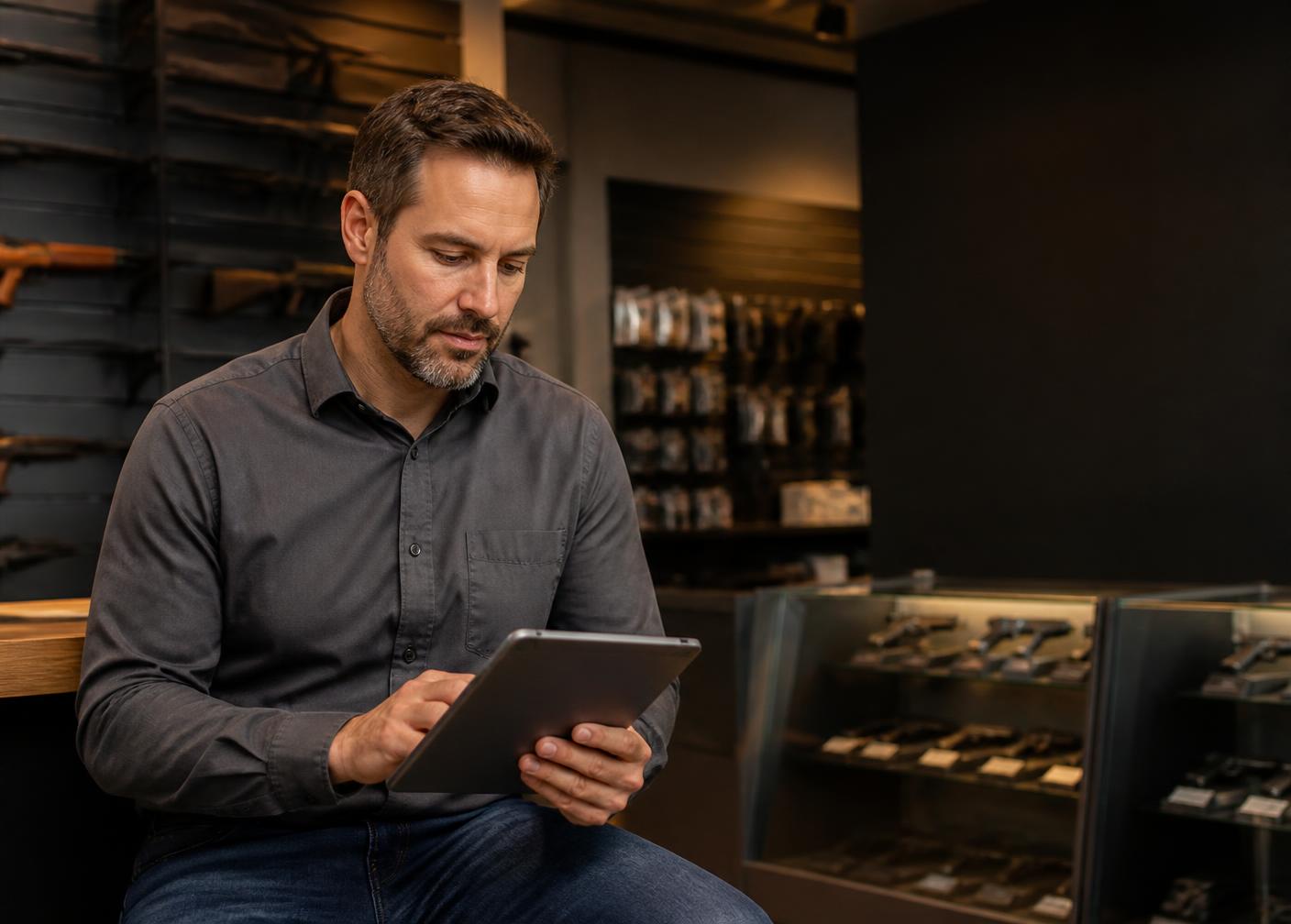
Local visibility, per-service pages, evidence of craftsmanship and review velocity. The goal is qualified inquiries, not traffic volume.
- Local SEO
- Service pages
- Website design
- Reputation

Who We Help
Turn specialized technical expertise into stronger local visibility, better customer communication and a more organized service business.
Systems in view
ConceptualSearch behaviour
A gunsmith is not competing for product searches. Customers arrive with a specific job in mind and a specific question: can this shop do it, how long will it take, and what will it cost. Searches look like gunsmith near me, a repair type, a refinishing process, or specialty and machining work where the shop genuinely offers it.
That intent is narrow and high value. It is also easy to lose — usually to a shop that simply wrote a clear page about the service and answered the phone faster.
Site architecture
Only where there is real expertise and real demand. A page for work the shop does not want is worse than no page.
A single "Services" list forces every search — repair, refinishing, sight work, custom builds — onto one page that matches none of them well. Individual service pages let the shop describe the actual process, set turnaround expectations, show finished work and quote realistically.
They also let the shop filter. Being explicit about what you do not take on removes the inquiries that waste bench time. That is a business outcome, not just an SEO one. Local SEO and website design cover the build.
Service content stays at the business level: what the shop does, how the process works and what to expect. We do not publish technical modification instructions.
E-E-A-T
For a service business built on skill, proof carries more weight than copy.
Real experience
Years in the trade, the kind of work the shop specializes in, and the work it refers out.
Training background
Formal training, apprenticeships and certifications — stated accurately, never inflated.
Shop images
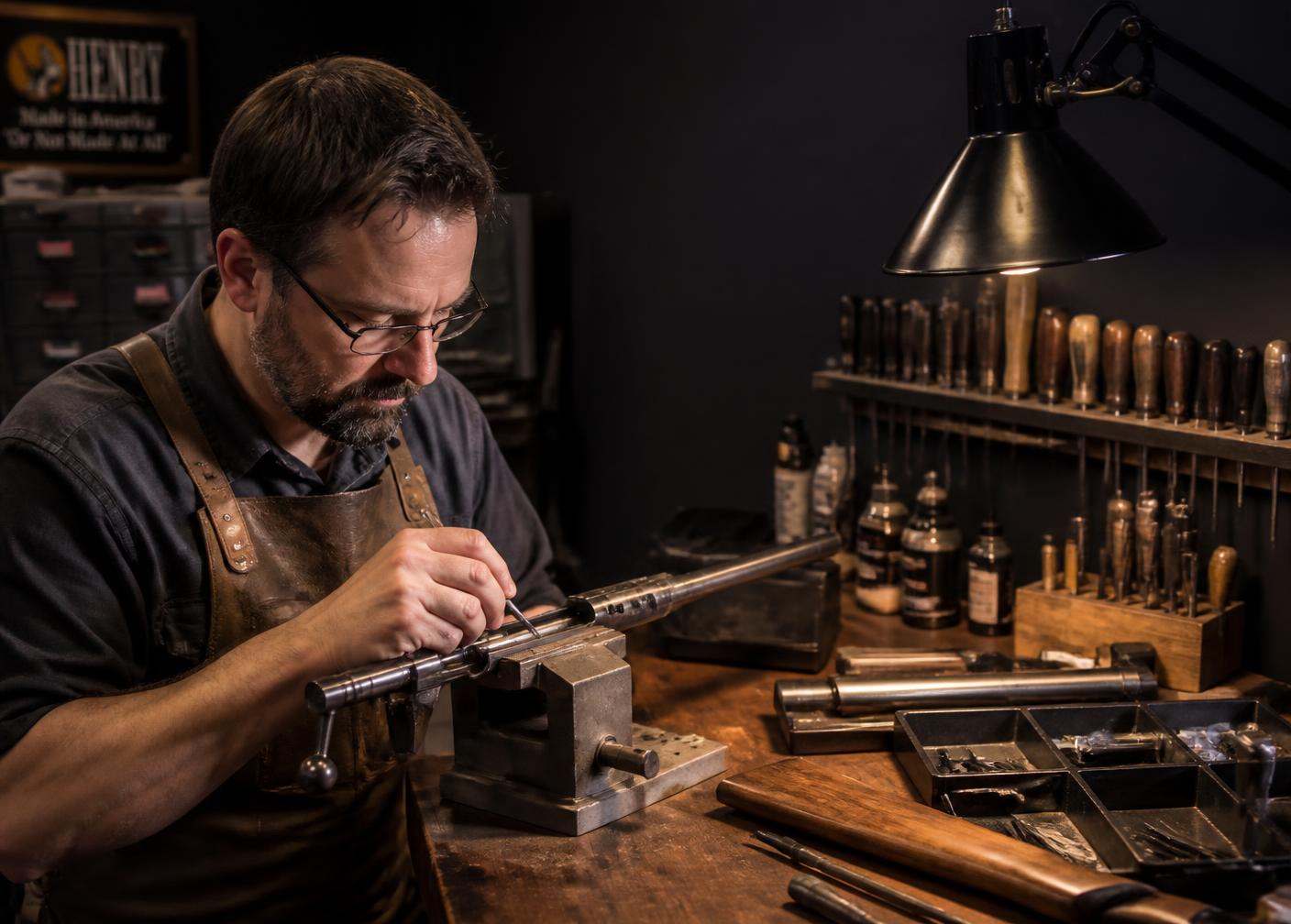
The actual bench, tooling and workspace. Customers are deciding whether to hand over a firearm.
Completed work
Before and after photography where the customer approves it. The strongest asset most shops already own.
Team biographies
Who does the work, and what they are known for. People choose a gunsmith, not a company.
Customer reviews
Recent, specific and responded to. Local trust is decided here.
Workflow
The revenue leak in most shops is between inquiry and communication — not in the work itself.
An inquiry that waits two days is usually gone. A customer who is not told their firearm is ready comes back annoyed and does not refer anyone. A completed job with no review request produces no compounding value at all.
None of that requires complex software. It requires one place where jobs and customers are recorded and a consistent habit around updates and completion. CRM and review automation handle the follow-up and the reactivation of past customers whose firearms are due for service again.
Most lost gunsmith revenue sits between inquiry and communication, not in the shop work itself.
The Five Systems
This is a service business. Growth and Retention carry it; the others support.
Local visibility, per-service pages, evidence of craftsmanship and review velocity. The goal is qualified inquiries, not traffic volume.
Straightforward: deposits, service payment at pickup and counter processing. Relevant underwriting considerations apply where the shop also transfers or sells firearms.
Situational. Parts sourcing and shipping matter for shops taking mail-in work; a purely local bench business has little fulfillment surface.
Service businesses live on repeat work and referrals. Job history, completion follow-up, review requests and periodic maintenance reminders.
A single record for jobs and customers, reliable hosting, and enough reporting to know which service lines are worth the bench hours.
What we usually find
Answers
Related services
Each service page covers the specific implementation detail behind these systems.
Storefront, range and transfer-dealer visibility across local search surfaces.
Conversion-first storefront design built around firearm buying behavior.
Review velocity systems for stores, ranges and instructors.
Customer records unified across counter, web and range.
Structured review capture and response.
Other business models
Proof
Documented implementations — what was built and how the business runs afterwards. No modelled or estimated performance figures.
Multi-location firearm retail · WooCommerce · FFL Cockpit
Two retail locations, a live firearm catalog and a transfer operation, unified behind one ecommerce, inventory and marketing system instead of three disconnected tools.
Read the case study →Local retail + national ecommerce · WooCommerce · FFL Cockpit
A family-run Wynne, Arkansas retailer running a large national firearms and ammunition catalog — two very different businesses served by a single ecommerce, fulfillment and search architecture.
Read the case study →Systems Assessment
We evaluate your growth, ecommerce, payment, fulfillment, retention and operating systems, then show you where the biggest opportunities are.